Smart solutions for the cities of the future
Contact us

+46104952495

Smart Waste Management for Property Owners

Properties, residential areas, and commercial spaces need waste management solutions that work in everyday life. When trash cans, bins, or recycling stations become overflowing, it affects the user experience, operations, and trust in the location.

Waste management outside buildings is not just about collecting trash

The goal is to create order, reduce friction, and make it easy for residents, tenants, visitors, and maintenance staff to do the right thing.

Many property owners face problems when waste volumes fluctuate, bins are placed in the wrong locations, or collection follows fixed schedules that don’t match actual needs. Some bins quickly become overfilled, while others are barely used. The result is unnecessary work, littered surroundings, and dissatisfied users.

Smart waste management helps you work in a more needs-based, data-driven, and efficient manner.

Common challenges with waste outside buildings

Properties and common areas often generate several different types of waste. Residents, tenants, visitors, stores, offices, and service providers can all contribute to different types of waste.

Common challenges include:

  • overflowing trash cans in common areas
  • littering around entrances, courtyards, walkways, and trash rooms
  • fixed collection schedules that do not match actual needs
  • difficulty knowing which bins need to be emptied
  • inadequate waste sorting or incorrect sorting
  • unclear waste collection points that cause frustration
  • additional costs for emergency cleaning or extra trash pickups
  • dissatisfied residents, tenants, or visitors
  • unclear division of responsibility between property owners, facility managers, and contractors

When waste management isn't working, it quickly becomes apparent. All it takes is an overflowing trash can at the entrance or litter around a recycling station for the entire property to feel less well-maintained.

That is why smart waste management is important for property owners

Property owners need solutions that work both practically and economically. It’s not enough for a waste management system to look good on paper. It has to work in the real world, every day.

Smart waste management provides better control over how the waste management system is actually used.

This may help you:

  • View fill levels and load over time
  • reduce the risk of overflowing bins
  • empty as needed rather than strictly according to a set schedule
  • reduce unnecessary emptying and inspection rounds
  • improve cleanliness in common areas
  • provide a better basis for placement and sizing
  • improve waste sorting and user behavior
  • reduce complaints from residents, tenants, and visitors

This is particularly valuable in buildings where many people share the same spaces. Small problems can quickly become major annoyances.

How the solution works

Smart Waste Management for Property Owners 1

Smart waste management can be tailored to the type of property, its users, and its operational setup.

For example, a solution could consist of:

  • smart, high-capacity trash cans
  • level sensors that measure waste levels
  • digital overview of emptying needs
  • notifications when bins are getting full
  • data showing load over time
  • solutions for waste sorting in shared spaces
  • basis for better placement of bins and waste collection stations
  • monitoring that identifies where problems arise

The goal is to create a more predictable and efficient waste management system: the right collection, in the right place, at the right time.

Learn more about smart trash cans

Cleaner shared spaces enhance the building experience

Entrances, courtyards, walkways, parking areas, bike storage rooms, retail spaces, and shared outdoor areas all influence how a property is perceived. If these areas are clean and well-maintained, the property feels safer, more professional, and more attractive.

Smart waste management can help:

  • less visible litter
  • fewer overflowing bins
  • better organization in common areas
  • fewer emergency cleaning operations
  • clearer accountability and follow-up
  • a better experience for residents, tenants, and visitors

This is a simple but important point: waste management may not be the first thing people think of when it’s working properly. But when it’s not, you notice it right away.

Reduce unnecessary emptying and gain better control over operations

Many properties follow set routines for emptying trash bins. While this may be easy to manage, it often results in some bins being emptied too often and others too late.

With data from smart waste management, it becomes easier to see what is actually needed.

This can help:

  • fewer unnecessary empties
  • reduced time spent on manual checks
  • better planning of operations and maintenance
  • fewer emergency measures
  • less strain on the operations team
  • better communication with contractors
  • more transparent tracking of costs and results

This can be particularly valuable for property owners with multiple properties. When you have an overview of multiple locations, it becomes easier to compare, prioritize, and make improvements.

Improved waste sorting in buildings and residential areas

Waste sorting works best when it is easy to understand and easy to use. In buildings, many different people often use the same system, which makes clarity especially important.

A good solution needs to take the following into account:

  • what types of waste are generated
  • how people move around the building
  • where sorting comes most naturally
  • how signage and color coding are used
  • how easy it is to empty and maintain the solution
  • how misclassification can be reduced
  • how the solution works over time

Smart waste management can be combined with clearer source separation, better placement, and monitoring of usage. This makes it easier to adjust the solution once you see what works and what doesn’t.

Learn more about waste sorting in public spaces

For which types of properties is smart waste management suitable?

Smart waste management can be used in many types of buildings and shared spaces.

Examples of environments where this solution might be suitable:

  • residential areas
  • rental properties
  • condominium associations
  • marketplaces
  • Shopping centre
  • office properties
  • campus areas
  • hospital campuses
  • schools and educational settings
  • courtyards
  • entrance areas
  • parking areas
  • walkway
  • shared outdoor spaces
  • park areas adjacent to residential properties

Needs vary from one property to another. A retail center may generate large amounts of packaging and visitor waste, while a residential area often requires a clear structure, simple sorting, and reliable long-term operation.

Smart waste management for housing companies and homeowners' associations

In residential areas, waste management affects the daily lives of many people. If bins become overfilled or sorting guidelines are unclear, this often leads to frustration, improper sorting, and extra work.

Smart waste management can help housing companies and homeowners' associations to:

  • gain better control over shared waste areas
  • reduce litter around recycling stations
  • improve waste disposal procedures
  • See which locations have the highest traffic
  • reduce unnecessary checks
  • create clearer waste management systems for residents
  • gain a better foundation for making changes

It can also be a good way to test changes on a smaller scale before implementing the solution in more buildings.

Smart waste management for retail spaces and downtown properties

Retail spaces and downtown properties often have strict cleanliness requirements. Visitors, stores, restaurants, and service businesses generate waste streams that vary significantly throughout the day and week.

Smart waste management can help:

  • cleaner entrances and walkways
  • better management of lunch and takeout waste
  • fewer overflowing trash cans
  • a better experience for visitors
  • more efficient operations on weekends and during promotional periods
  • more thorough monitoring of high-traffic areas
  • better conditions for sorting

In retail settings, waste management becomes part of the customer experience. A cluttered environment can detract from the overall impression, even if the stores, signage, and other areas are well-maintained.

Smart waste management for offices and workplaces

In office buildings and workplaces, waste management is often about making it easy for people to do the right thing. This is especially true in common areas such as lobbies, break rooms, courtyards, and break areas.

Smart waste management can help:

  • create a better layout for common areas
  • reduce overflowing bins
  • improve sorting
  • track usage over time
  • adjust placement and capacity
  • reduce unnecessary checks
  • create a more professional work environment

For property owners with multiple tenants, clearer waste management solutions can also lead to fewer complaints and higher standards for the common areas.

When is smart waste management a good fit for property owners?

This solution is particularly well-suited if any of the following sound familiar to you:

  • You have recurring problems with overflowing bins
  • Common areas quickly become cluttered
  • you receive complaints from residents, tenants, or visitors
  • Emptying is carried out according to fixed schedules without taking demand into account
  • you want to reduce manual inspection rounds
  • You want to improve recycling and reduce mis-sorting
  • You manage several properties and want to get a better overview
  • you want to reduce unnecessary trips to the trash
  • You want to test smart waste management in a pilot area
  • You want to create a cleaner, safer, and more attractive property environment

It may be wise to start where the problems are most visible or most costly. This often involves entrances, courtyards, retail spaces, high-traffic common areas, or heavily used waste collection points.

Benefits for property owners and site managers

Smart waste management creates value for multiple groups.

For property owners

You’ll enjoy better control, clearer tracking, and cleaner shared spaces.

For the operations organization

Staff can prioritize the right actions and spend less time on unnecessary checks.

For residents and tenants

Waste management becomes simpler, more straightforward, and less disruptive to daily life.

For visitors

The property is perceived as being better maintained, safer, and more professionally managed.

For sustainability efforts

Better sorting, fewer unnecessary trips, and more efficient operations can enhance a property’s sustainability profile.

What is smart waste management for property owners?

Smart waste management for property owners involves using sensors, smart trash cans, and data to better monitor fill levels, emptying needs, and waste volume in the property’s common areas.

How can smart waste management reduce littering in buildings?

By monitoring fill levels and emptying needs, bins can be emptied before they become overfilled. This reduces the risk of litter around trash cans, waste collection points, entrances, and common areas.

Is this solution suitable for condominium associations?

Yes, smart waste management can be a good fit for homeowners' associations that want to keep common areas tidier, reduce overflowing bins, and improve recycling.

Do all the containers need to be replaced?

No. It’s often possible to start with specific locations where the problems are most acute. Some bins can be replaced with smart trash cans, while others can be equipped with sensors or improved signage.

Can smart waste management reduce operating costs?

Yes, better information about fill levels can help reduce unnecessary emptying, minimize manual checks, and improve operational efficiency. The impact depends on the size of the property, the number of containers, emptying procedures, and usage patterns.

Can the solution be used on trading platforms?

Yes, retail spaces are often particularly relevant because waste volumes vary significantly between weekdays, weekends, lunchtime, and promotional events. Smart waste management can help keep entrances, walkways, and common areas cleaner.

Can smart waste management be combined with source separation?

Yes. Smart waste management can be combined with source separation to create clearer waste management systems, improve monitoring, and make the process easier for residents, tenants, and visitors.

Where should you start?

Start where the problem is most visible or most costly. This could include entrances, courtyards, shopping areas, waste disposal rooms, shared outdoor spaces, or places where trash bins often become overfilled.

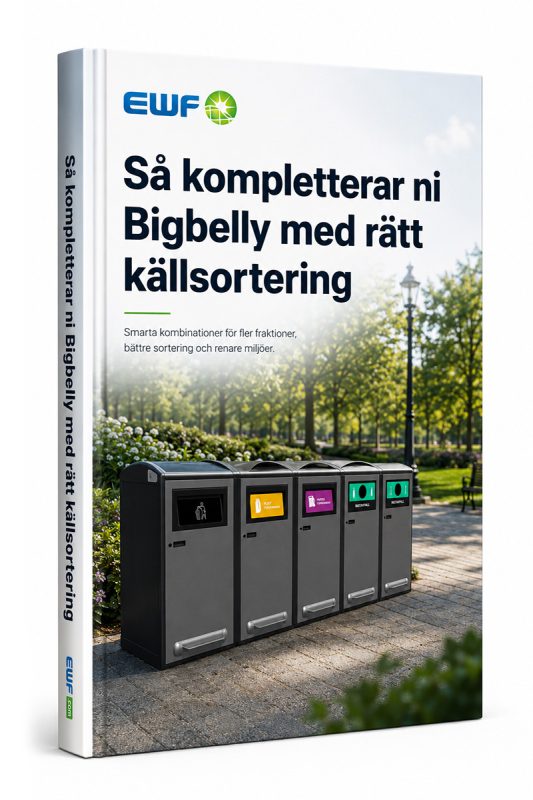
Download the guide to smart waste sorting

Download the ACE product sheet

Enter your details to download product sheets. The product sheet will in turn be sent to your e-mail address.
Log in

Let's work together!

Customer service: +46 (0)10-495 24 95
Head office: Vallbyvägen 22, 76251 Rimbo, Sweden
Mon-Fri: 07:30-16:30