

+46104952495
Smart waste management
Get an overview of fill levels and prioritize the right emptying jobs. With Bigbelly , you can combine connectivity, sorting, and—where appropriate—compaction.
From Fill Level to the Right Action
A smart trash can measures its fill level and displays the information in a digital system. This provides operations staff with the data they need to prioritize emptying and track how different locations are used.
Supplementary information helps you set priorities and can reduce unnecessary inspection rounds.
Compaction in, for example, Smart Max allows for more suitable waste to be stored between emptying cycles.
Use the history to review location, capacity, and procedures. The value comes from using the data in operations.
Select based on waste type and load
Not all smart trash cans have a compaction feature. Choose the model, opening, and labeling based on the type of waste generated and how the station will be used.
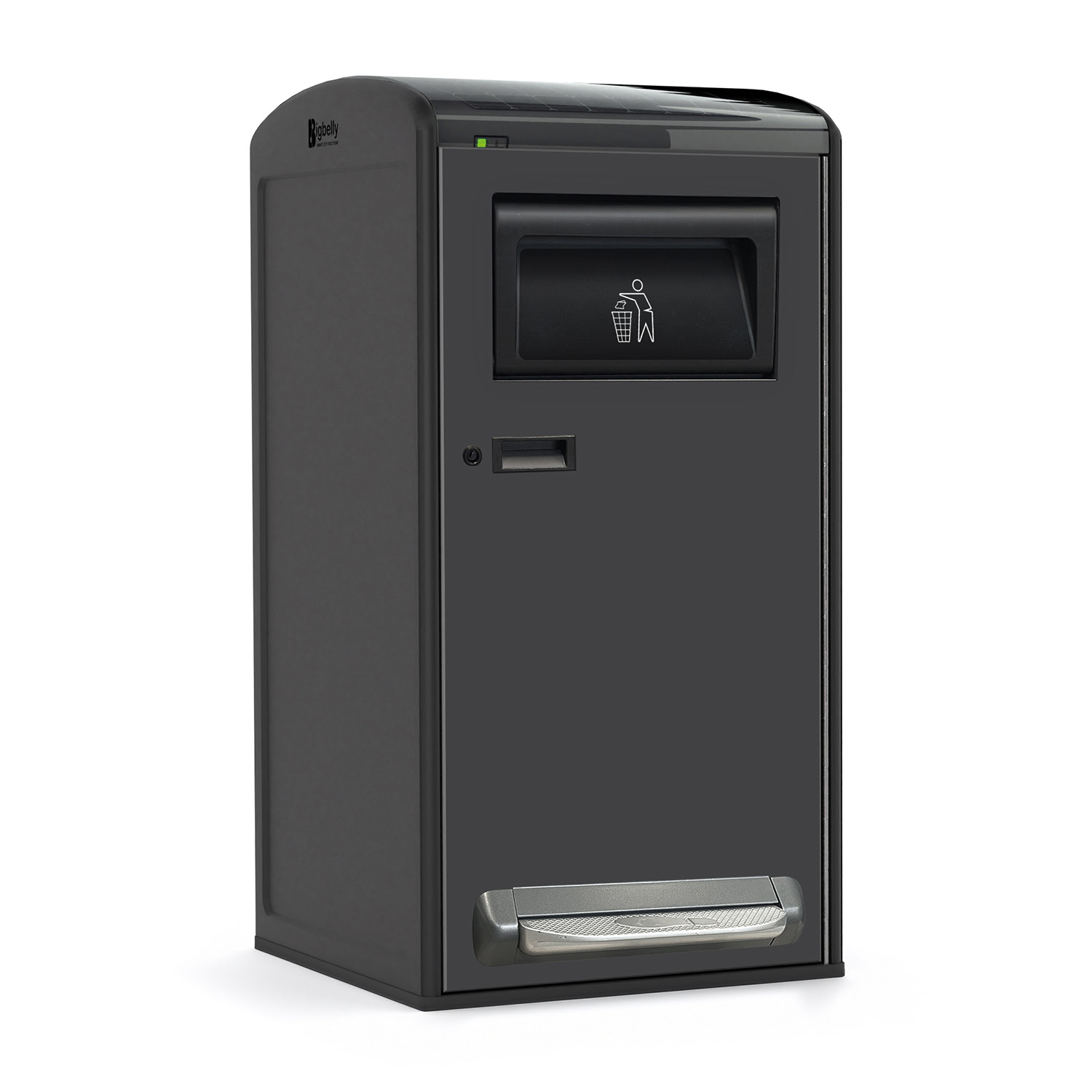
Sensors + Compression
A solar-powered model for locations where waste quickly fills standard trash cans. Compaction increases the capacity for suitable waste.
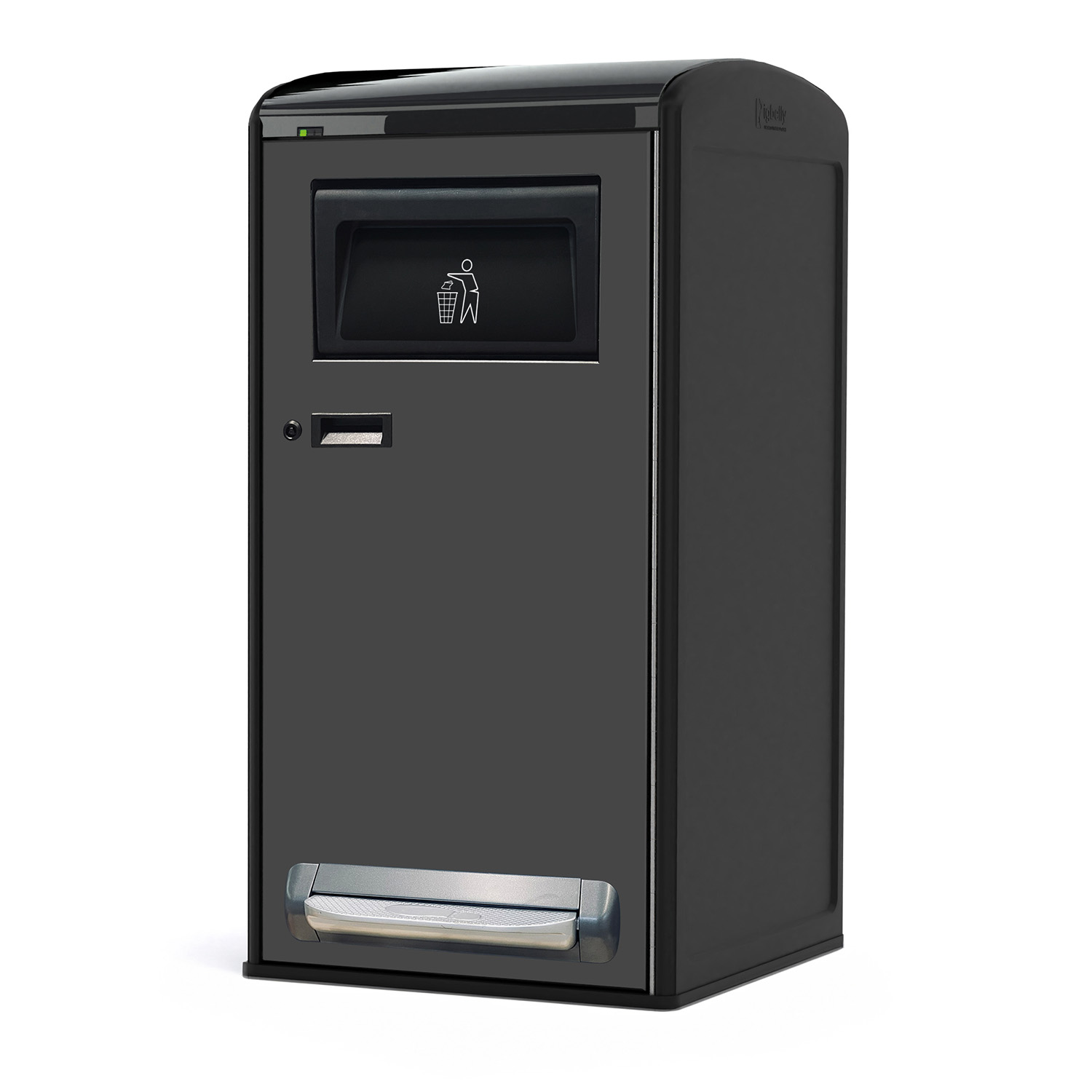
Sensors · without compression
Wheeled trash can with a closed opening and handle. A good option when you want to monitor fill levels without compaction.
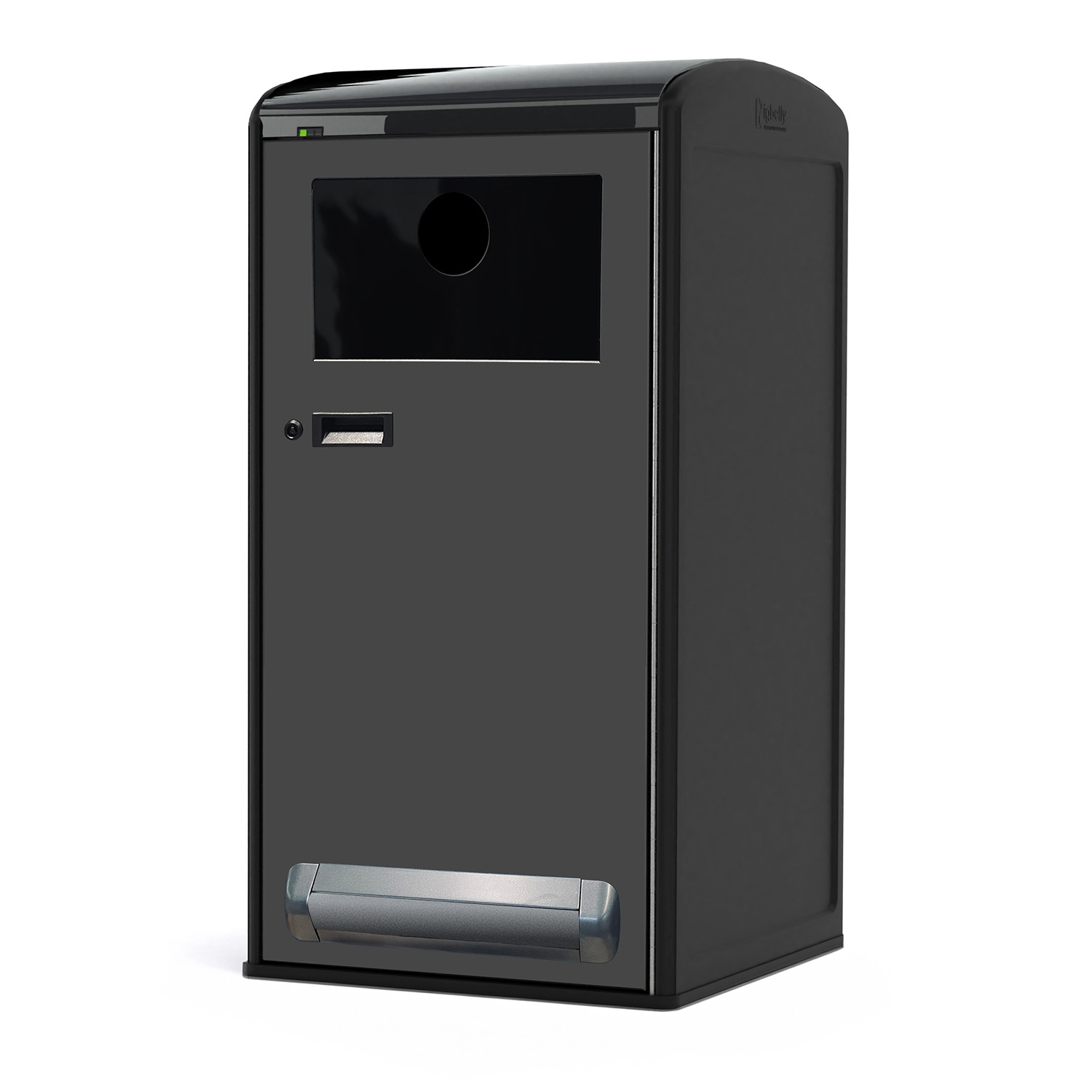
Sensors · without compression
Model with a round opening for cans and PET bottles. Clear openings and labeling help visitors make the right choice.
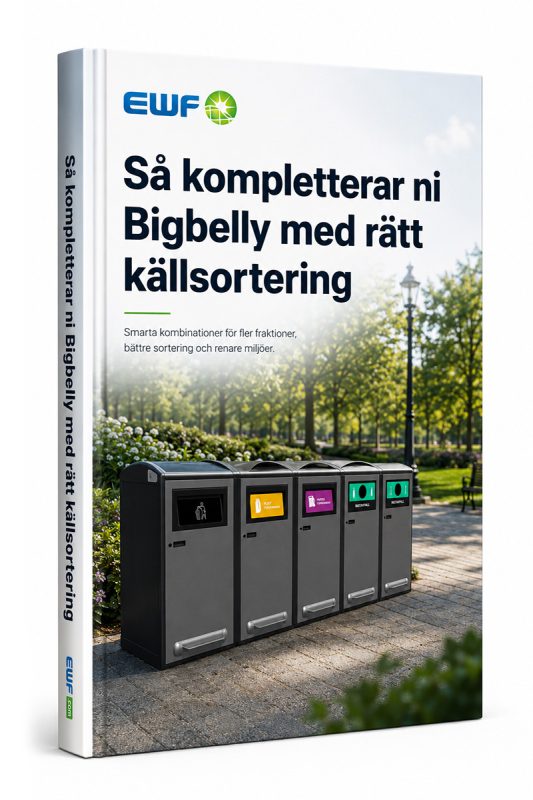
Combine units for relevant fractions. Bigbelly Element units can supplement the station where no connection is needed; the Element Chute does not have sensors or a compactor.
Are your existing containers working well? If so, an additional sensor might be an option. Read about fill sensors →
Adapt to the location
Get an overview of the entrances and common areas.
Adjust the frequency of service based on peak times and passenger flow.
Track variations between weekdays, weekends, and seasons.
Experiences from Real Places
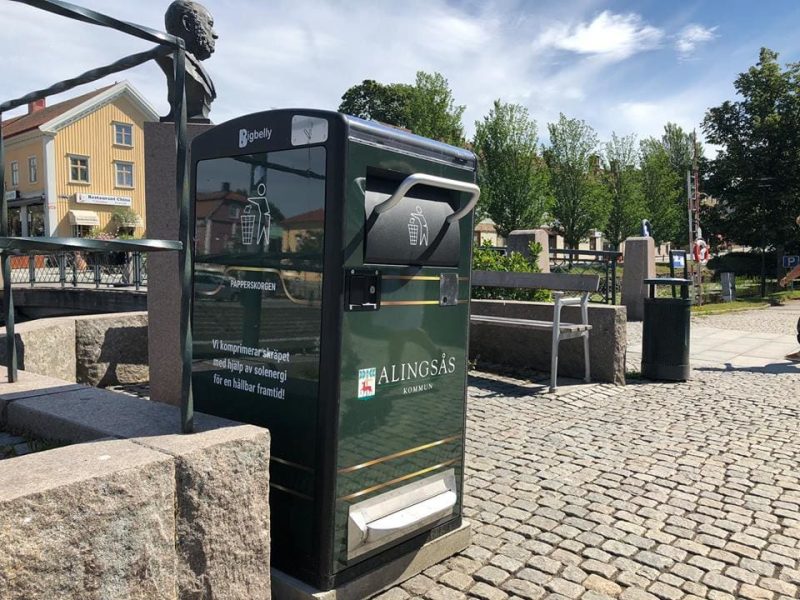
See how the municipality has expanded the use of Bigbelly in public spaces.
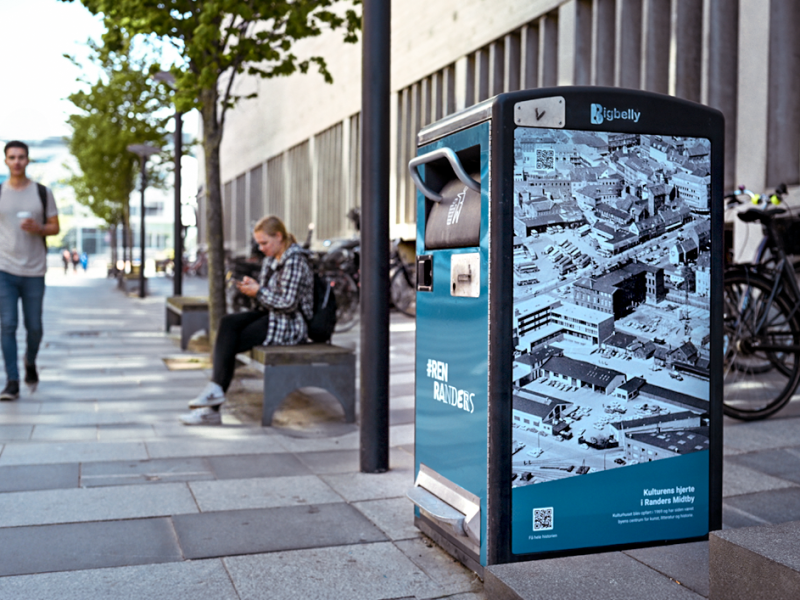
Trash cans featuring local history serve both as waste receptacles and as vessels for stories.
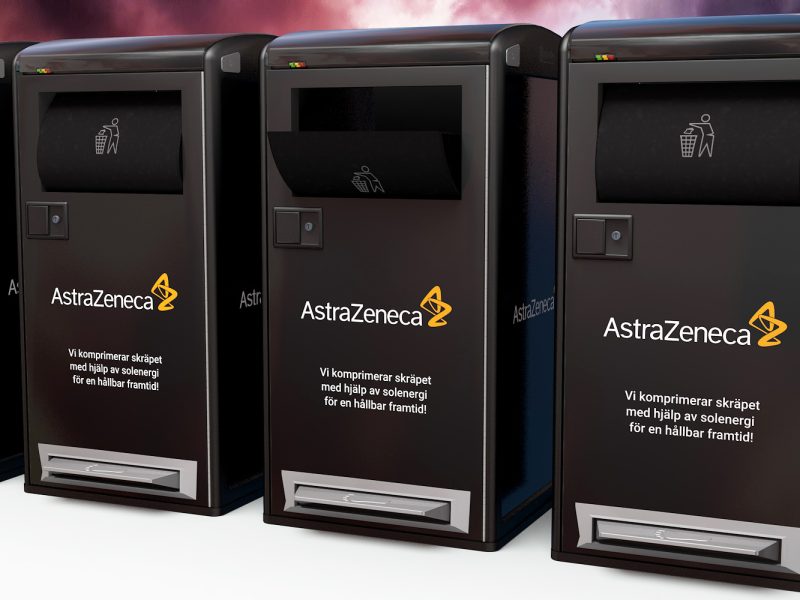
Bigbelly in a corporate environment with shared spaces and day-to-day operations.
From Need to Successful Operation
Tell us about your waste, the volume, and today's pickup. We'll help you choose the right models and locations, starting with a first step that can be followed up on.
Questions and Answers
No. Bigbelly Smart Max features compaction, while Smart Chute and Smart Open have sensors but no compaction. Choose based on the type of waste and your capacity needs.
Yes. Multiple units can be combined into a single station. The feed opening, labeling, and capacity must be adapted to the waste fractions and the method of waste collection.
When choosing a model, location, and maintenance routine, you need to take the local climate into account. For solar-powered models, lighting conditions must also be considered. Read more about Bigbelly in different weather conditions.
It depends on the type of waste, the volume, and current procedures. Start with selected locations and compare collection rates, littering, and the amount of work required before and after the change.
Yes, we'll help you determine whether it can be expanded with additional components, a different layout, or more units. Start by looking at your existing models and identifying what needs to be improved.
Let's work together!
Customer service: +46 (0)10-495 24 95
Head office: Vallbyvägen 22, 76251 Rimbo, Sweden
Mon-Fri: 07:30-16:30