
+46104952495
When large numbers of people are passing through, it needs to be easy to find your way. We help you plan waste management, recycling, and electric bike charging for travel centers, train stations, bus terminals, and airports. We take into account travelers’ routes, the site’s capacity, and staff workflows—from entrances and waiting areas to bike parking facilities.
Upon arrival
Place the containers where they are visible from the walkways. Leave room for lines, luggage, and service.
While waiting
Collect relevant waste streams near seating areas and food vendors. Use signage that is easy to understand.
At the bike parking area
Plan charging based on duration of stay, electrical connection, and access. Distinguish between removable batteries and charging at the bike.
Entrances, waiting areas, and food service areas place different demands on the location and capacity of waste stations. Start by considering where waste is generated and how travelers move through the terminal. Group the waste categories to be sorted in clearly designated areas, with consistent labeling and sufficient space for both use and emptying.
Plan inspections and emptying based on the workload throughout the day. Fill-level data helps operations staff prioritize stations. At airports, product selection and placement must be coordinated with the managers of the respective areas. Clarify who is responsible for emptying, cleaning, and reporting malfunctions, especially where multiple operations share common areas.
At entrances and outdoor walkways, the amount of waste can vary from one departure to the next. Choose the capacity based on the volume of waste and collect the types of waste that are actually generated. Compaction can free up more space for appropriate waste. Fill level information helps staff prioritize emptying the bins.
Also plan for access. The containers need to be easy to find and possible to empty without blocking the main walkways.
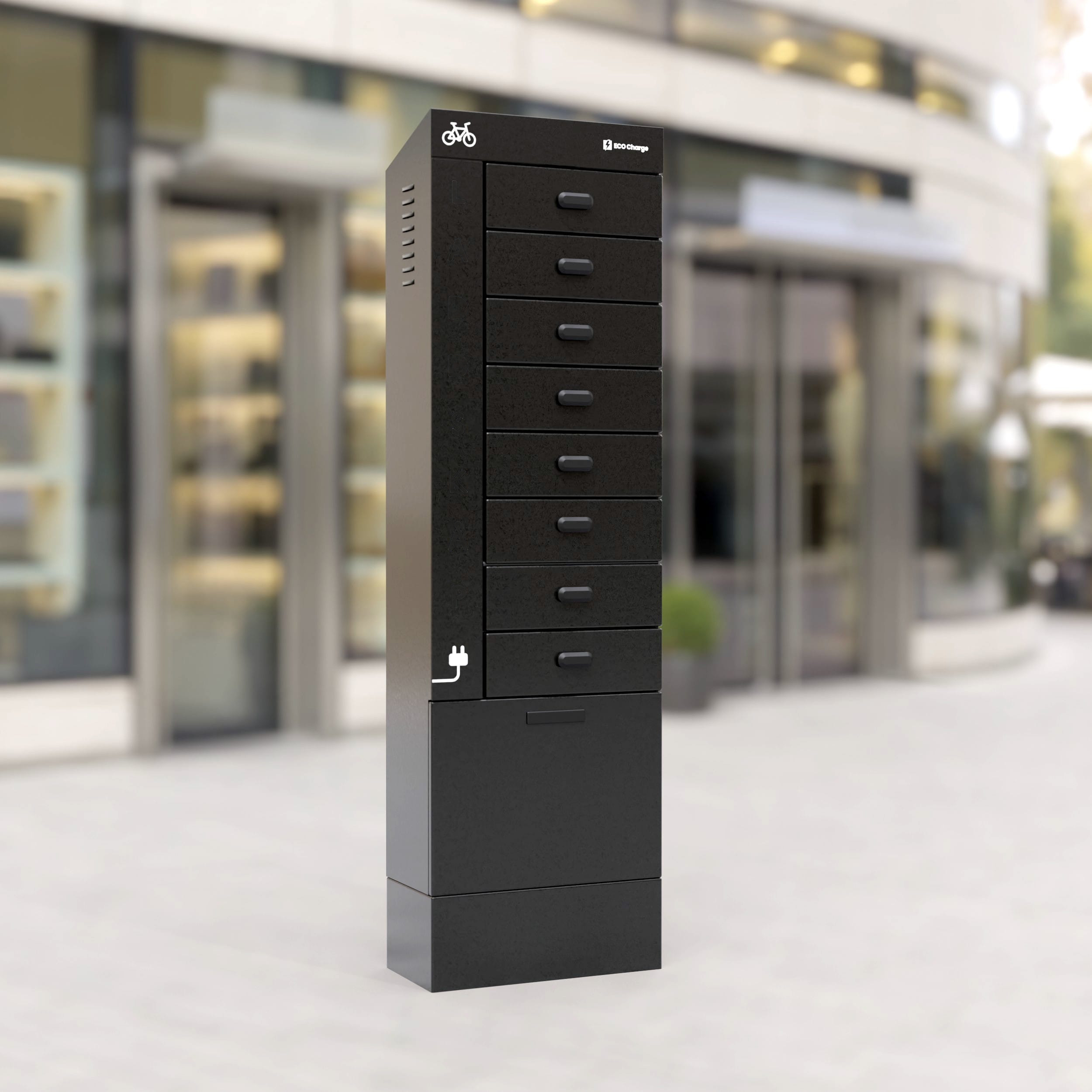
A charging station at the bike parking area provides commuters with a designated spot for removable e-bike batteries while they continue their journey by bus or train. At terminals and airports, charging stations can also be set up for employees who bike to work.
Choose the location and locking solution based on how the space is used. Consider operating hours, electrical connections, and who is responsible for supervision. On-bike charging is another option that needs to be adapted to compatible bike models.
Take into account the amount of waste, the location, and how long travelers stay.
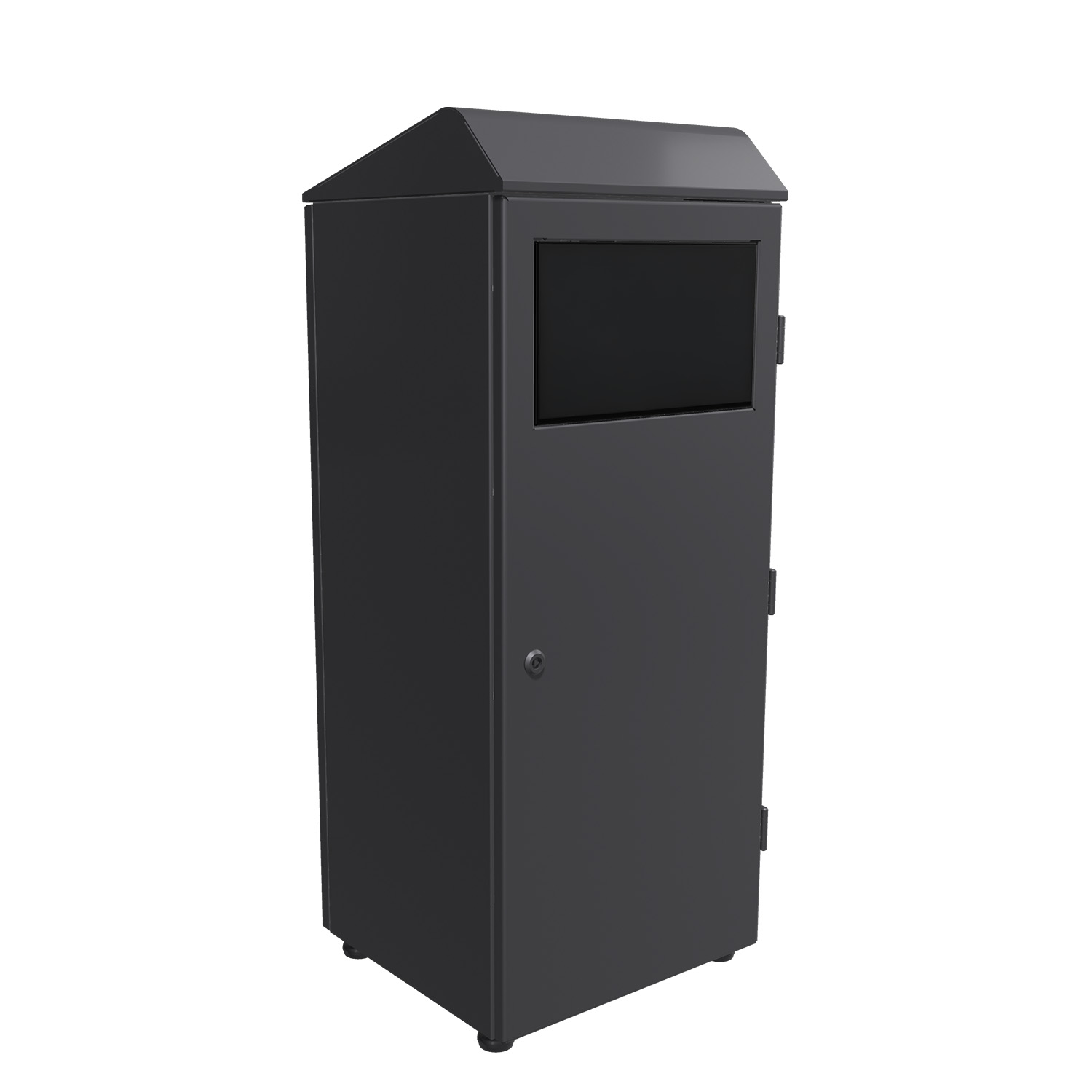
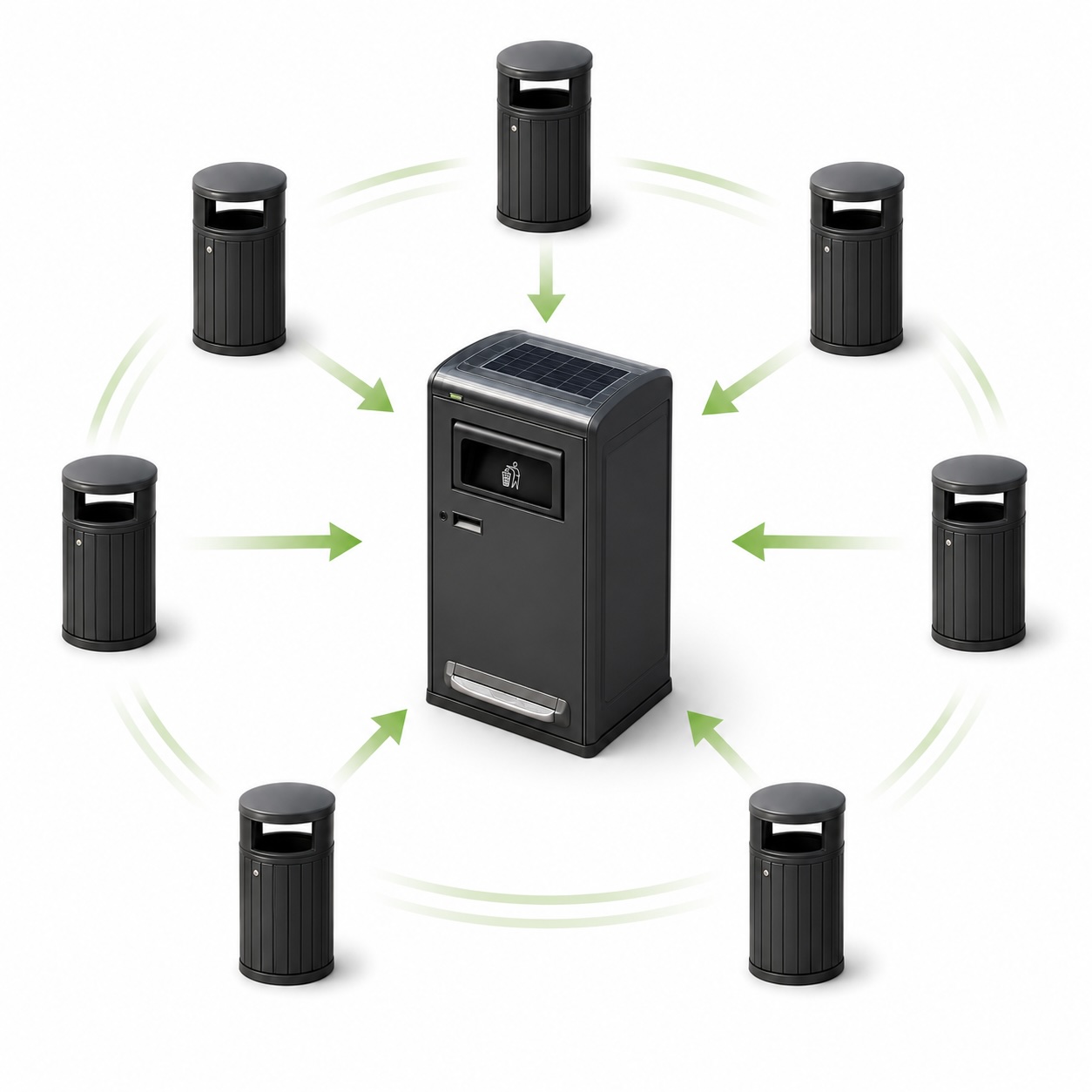
Modular Waste Sorting
Combine modules, drop-off points, and labeling to create a sorting station that fits the space. A great option for entrances, walkways, and common waiting areas.
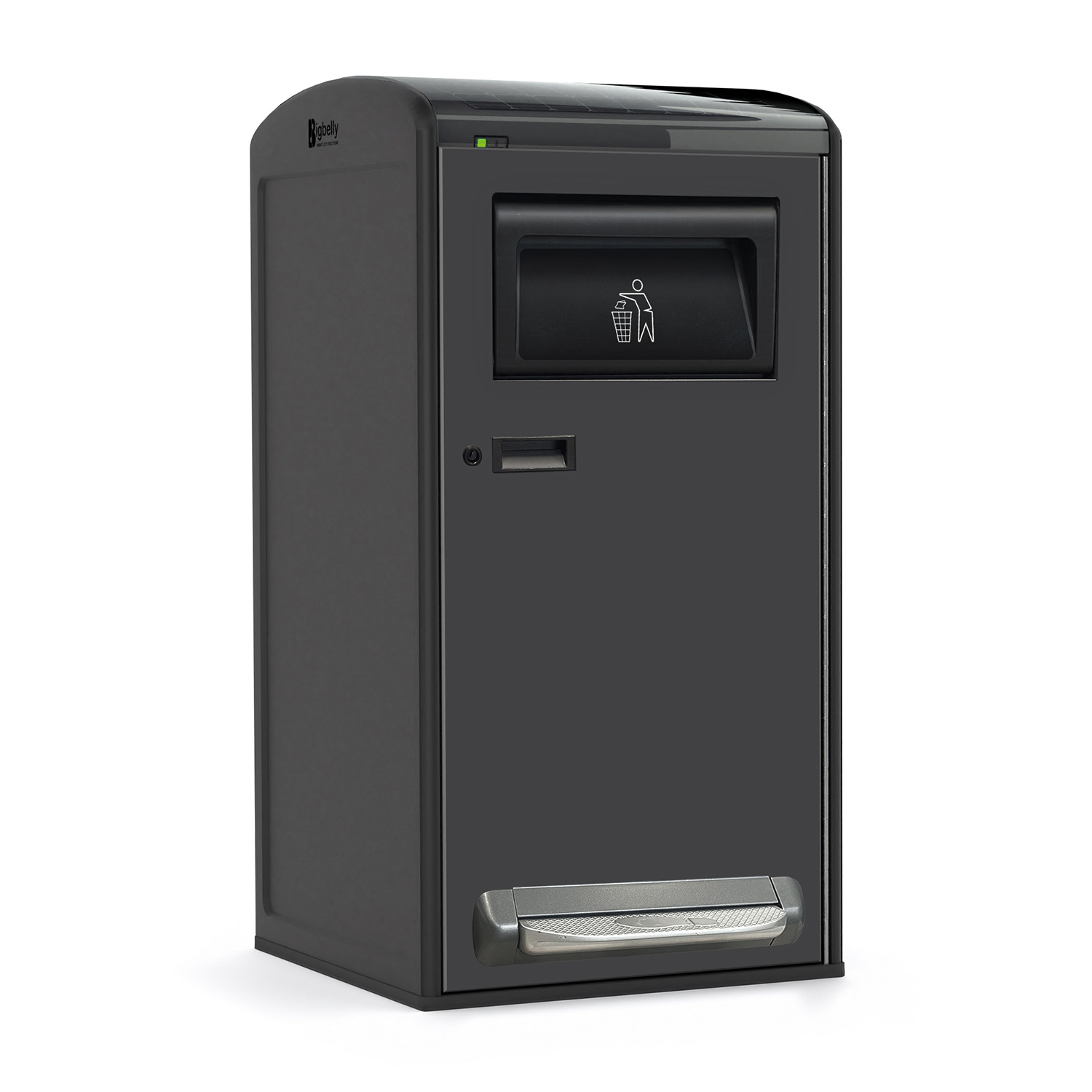
High capacity
Compaction increases the capacity for appropriate waste. The fill level information helps operations staff prioritize emptying bins at busy entrances and outdoor walkways.
Removable batteries
Eight individually lockable compartments with electrical outlets for removable electric bike batteries. For bike commuters and employees who want to store and charge their batteries during their commute or workday.
Different areas may require different capacities and features. Base your decisions on waste volumes, location, and available space. Be sure to use consistent labeling so that travelers can easily identify the sorting options.
Start by determining who will use the charging stations, how long the bikes will be parked, and how users will gain access. Charging cabinets are designed for removable batteries. On-bike charging requires a solution that fits the bike’s connection point. Plan the electrical connection, placement, and supervision together with the site managers. At an airport, staff bike parking may be a relevant starting point.
Evaluate entrances, waiting areas, and food service areas separately. Coordinate product selection, placement, and service access with airport management. Determine who will be responsible for waste removal, cleaning, and follow-up in each area. Electric bike charging stations can be planned separately for staff and others who bike to the airport.
Tell us about your station, terminal, or airport—how travelers move through the facility and how waste collection works today. We’ll help you select products and plan their placement, capacity, and any electric bike charging stations based on the site’s specific conditions.