Smart solutions for the cities of the future
Contact us

+46104952495

Waste sorting in public spaces

Meet the 2026 requirements, reduce mis-sorting, and gain control over operations—even in high-wear environments where attention is limited.

Waste sorting in parks – when it really needs to work

Waste sorting in public spaces is an important part of a more sustainable society. At the same time, it is often difficult to make it work in practice.

In parks, town squares, at transit centers, in city centers, and in other public spaces, people are often in a hurry, distracted, or only staying for a short time. In such cases, the sorting system must be easy to understand right away.

EWF ECO municipalities, property owners, and public agencies create waste sorting systems that are clear, durable, and tailored to actual waste streams.

New requirements for waste sorting in public spaces

Waste Sorting in Public Spaces 1

Starting January 1, 2026, it will be possible to sort packaging waste at the source in certain public places in Sweden. This applies, among other things, to public areas where people move about, spend time, and dispose of waste.

This means that more municipalities, property owners, and public entities need to review how waste sorting works in practice.

Given these requirements, the solution must be:

  • clear to the visitor
  • tailored to the site's waste
  • easy to empty and maintain
  • durable enough for public spaces
  • possible to monitor and adjust
  • scalable across multiple locations

Waste sorting solutions for public spaces

EWF offers waste sorting solutions for public and community settings with high standards for clarity, sustainability, and operational efficiency.

The solution could, for example, consist of:

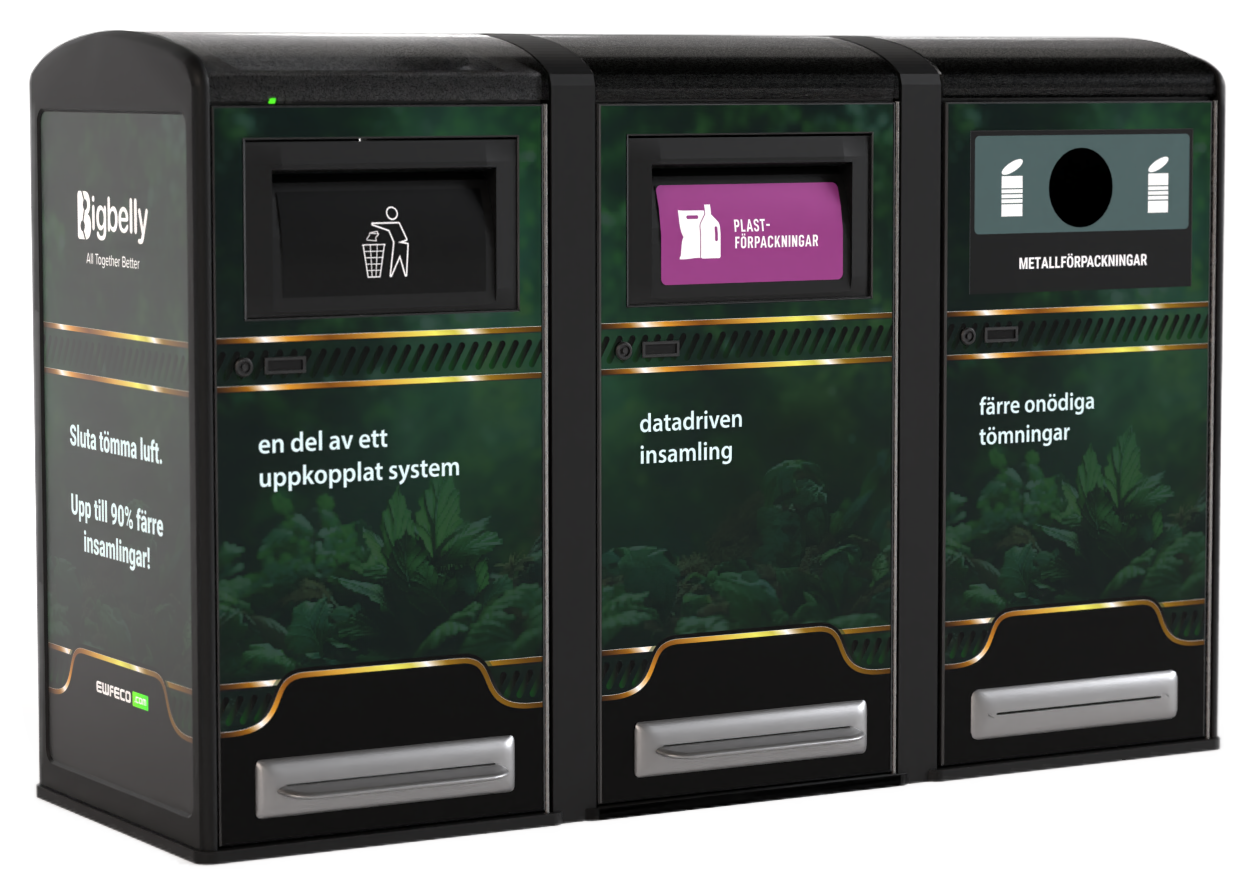
  • recycling stations for public spaces
  • smart trash cans with sensors
  • smart trash cans with a compactor
  • level sensors for existing tanks
  • solutions for parks, plazas, and city centers
  • solutions for travel centers and public transportation
  • solutions for real estate and retail spaces
  • Custom signage and waste sorting labels
  • Monitoring of fill level and usage

Waste Sorting for Parks and Green Spaces

People sort their trash in nature.

In parks and green spaces, litter often accumulates from picnics, takeout, events, barbecue areas, and recreational activities. The amount of litter varies greatly depending on whether it is a weekday or weekend, the season, and the weather.

For waste sorting to work, it needs to be simple, durable, and located where people actually spend time.

Common needs in parks include:

  • Clear waste separation at picnic areas
  • tanks with the right capacity under high load
  • solutions that can withstand the elements and wear and tear
  • reduced risk of blood vessels becoming overfilled
  • Easy emptying for operating personnel
  • the ability to track usage over time

Learn more about smart waste management in parks and green spaces

Waste Sorting for Marketplaces and City Centers

In public squares and city centers, waste management is part of the overall impression of a place. Littered environments quickly affect the sense of safety, order, and attractiveness.

Here, the layout is often linked to retail, lunch crowds, open-air markets, outdoor dining, events, and pedestrian walkways.

A viable solution needs to take the following into account:

  • high and uneven visitor traffic
  • takeout containers
  • deposit and packaging waste
  • clearly located along the walkway
  • Easy emptying in central locations
  • a design that fits into the urban environment

Learn more about smart waste management for public squares and city centers

Waste Sorting for the Travel Center and Public Transportation

In public transportation settings, people are often in a hurry. This means that waste sorting must be extremely clear and easy to use.

At travel centers, stations, and bus stops, the right solution can help ensure cleaner surfaces, fewer sorting errors, and better operational control.

Key factors include:

  • clear symbols
  • a few relevant fractions
  • location near waiting areas, entrances, and walkways
  • high capacity at load points
  • solutions that do not disrupt traffic flow
  • Easy emptying without creating obstructions

Learn more about smart waste management for transit hubs and public transportation

Waste Sorting for Properties and Retail Locations

Properties, residential areas, shopping centers, and commercial complexes often have multiple user groups sharing the same space. Residents, tenants, customers, visitors, and operations staff need a solution that is easy to understand and simple to manage.

Here, waste sorting can help:

  • cleaner shared spaces
  • fewer complaints
  • better organization at entrances and walkways
  • minor misclassification
  • better monitoring of waste streams
  • clearer responsibilities in operations

Learn more about smart waste management for property owners

Combine source separation with smart waste management

Waste sorting becomes more effective when combined with smart waste management. This gives you not only bins for different waste categories, but also better control over fill levels, emptying needs, and actual usage.

This could include:

  • level sensors
  • smart trash cans
  • Compression
  • digital monitoring
  • on-demand emptying
  • Data for better placement and sizing

This makes it easier to adjust the solution over time and prevent waste sorting from becoming a static system that no one follows up on.

Learn more about smart waste management

When is a good time to review waste sorting?

It is particularly important to review your waste sorting practices if you:

  • is responsible for parks, squares, or public spaces
  • needs to meet new sorting requirements
  • is having problems with incorrect sorting
  • have overflowing bins or trash around recycling stations
  • wants to reduce unnecessary emptying
  • wants to improve the visitor experience
  • wants to gain better control over operations and monitoring
  • will renovate, develop, or procure new public spaces
  • wants to implement the solution in stages across multiple environments

It doesn't have to start on a grand scale. Often, a pilot project in the right place is a really good first step.

What is waste sorting in public spaces?

Waste sorting in public spaces means that people can sort their waste in public places, such as parks, town squares, transit hubs, city centers, shopping areas, and other locations open to the public.

Which locations are subject to the waste sorting requirements?

These requirements apply to certain public and communal areas where people gather and discard packaging waste. Specific conditions may vary, so it is advisable to check the latest information from the relevant authorities and assess your own location.

How many waste streams are needed in public spaces?

It depends on the location and the type of waste generated there. More categories do not automatically lead to better sorting. It is often better to start with the most relevant categories and make the solution extremely clear.

How can you reduce mis-sorting?

Incorrect sorting decreases when the solution is easy to understand, properly placed, and tailored to the waste at the site. Clear symbols, consistent color coding, and appropriate waste categories are more important than lengthy instructions.

Where should recycling bins be placed?

The bins should be placed where waste is actually generated. This could be near seating areas, entrances, walkways, food vendors, waiting areas, plazas, parks, or other places where people naturally dispose of waste.

Can waste sorting be combined with smart trash cans?

Yes. Waste sorting can be combined with smart trash cans, fill-level sensors, and digital monitoring. This provides better control over fill levels, emptying needs, and how the solution is used.

Is recycling in parks a good idea?

Yes, but the solution needs to be tailored to the specific location. Parks can experience significant variations in usage depending on the weather, season, events, and visitor traffic. That is why placement, capacity, and clarity are particularly important.

How do you know if recycling is working?

By monitoring usage, fill levels, mis-sorting, and operations. If certain bins are rarely used, frequently fill up, or lead to mis-sorting, the solution may need to be adjusted.

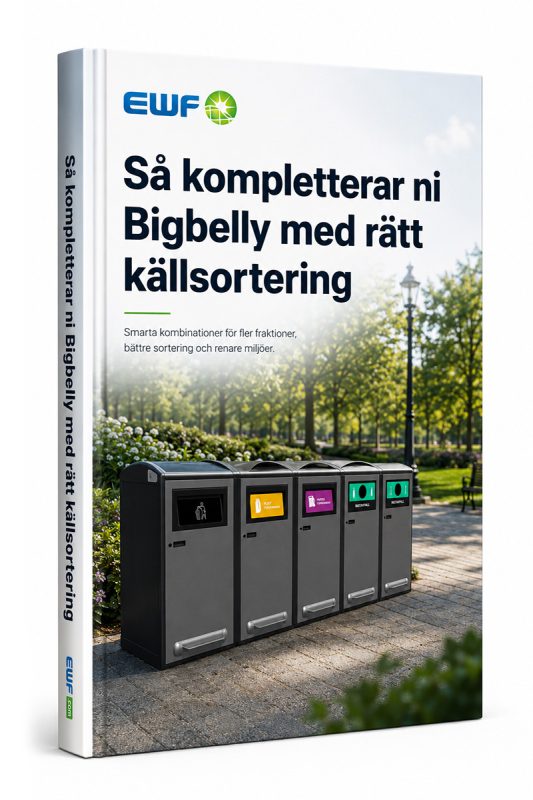
Download the guide to smart waste sorting

Download the ACE product sheet

Enter your details to download product sheets. The product sheet will in turn be sent to your e-mail address.
Log in

Let's work together!

Customer service: +46 (0)10-495 24 95
Head office: Vallbyvägen 22, 76251 Rimbo, Sweden
Mon-Fri: 07:30-16:30