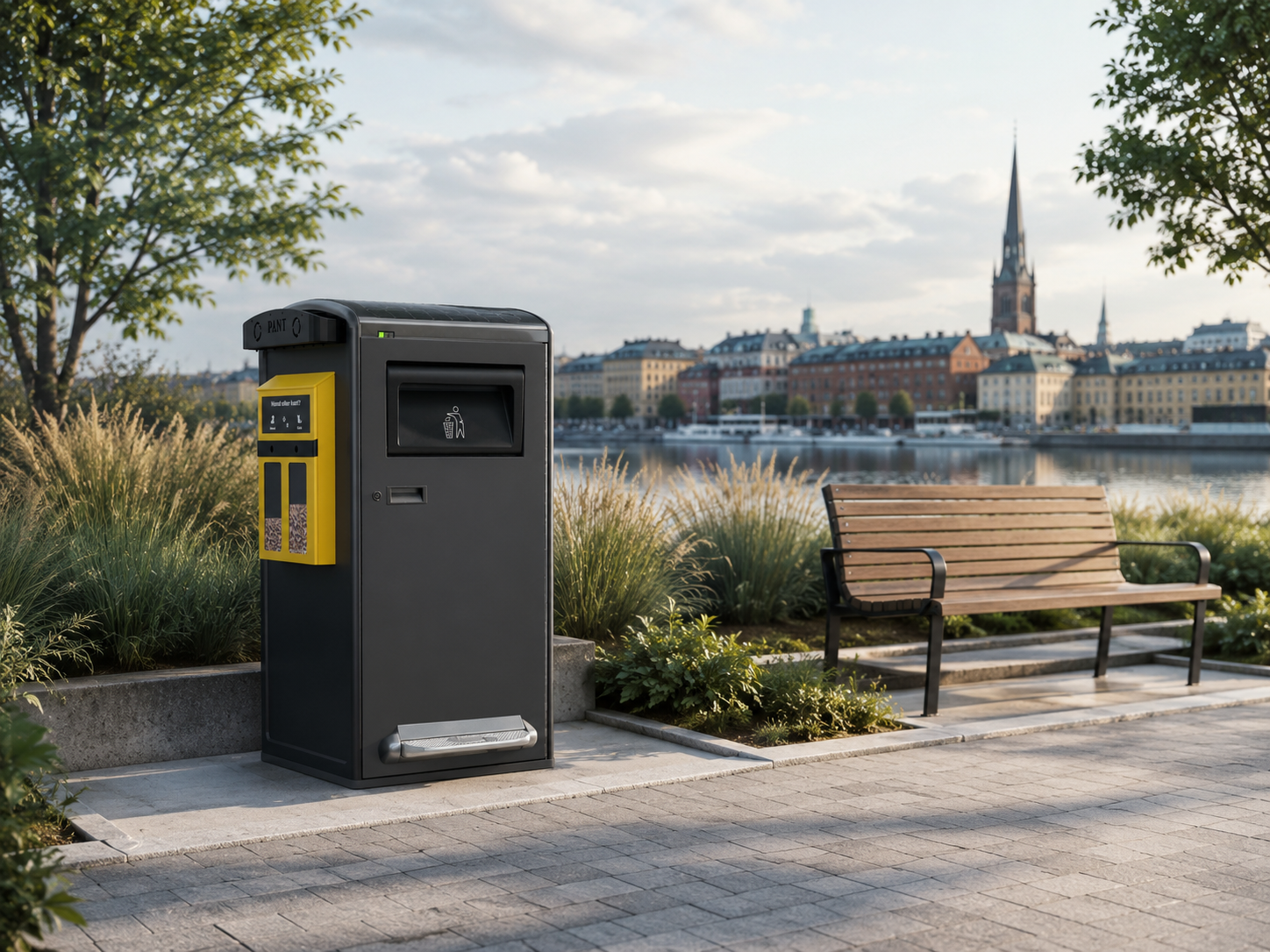
Get a handle on the trash before the park gets littered
Smart waste management gives municipalities, park managers, and property owners better control over fill levels, emptying needs, and operations. The result is cleaner environments, fewer unnecessary emptying trips, and more sustainable waste management in public outdoor spaces.
Overflowing trash cans, litter around the bins, and unnecessary collection rounds are common problems in parks and green spaces. Often, this is not due to a lack of maintenance, but rather to the fact that waste volumes are difficult to predict.
Smart waste management makes it possible to operate in a more data-driven way. With sensors, smart trash cans, and clearer monitoring, you can empty bins where they’re actually needed—not just where the schedule says someone should go.
Waste management in parks differs from that in many other settings. The workload is uneven, the areas are often large, and needs can change rapidly.
Common challenges related to waste in parks
Common challenges include:
- trash cans that get overflowing on sunny days, weekends, and during events
- trash that ends up next to the bins when they're full
- fixed collection schedules that result in unnecessary trips
- difficulty determining which bins actually need to be emptied
- birds and pests that scavenge for food
- Inadequate waste sorting in public spaces
- high operating costs associated with manual inspection
- a negative impact on the visitor's experience of the site
When trash isn’t picked up in a timely manner, it immediately affects the overall impression. A park may be well-planned, green, and popular—but if the trash cans are overflowing, that’s often what visitors remember.
That is why smart waste management is particularly well-suited for parks
In parks and green spaces, it is rarely effective to follow a strictly fixed routine. Some bins fill up quickly, while others remain almost empty. Some areas see heavy use during the summer but significantly less during the winter.
With smart waste management, you can tailor collection schedules to actual usage.
This makes it possible to:
- View fill levels in real time
- prioritize the right container at the right time
- reduce the number of unnecessary trips
- avoid overflowing trash cans
- improve cleanliness in the park
- reduce transportation and working hours
- monitor which locations have the highest traffic volume
- make better decisions about the placement and number of bins
This results in more efficient operations and a better experience for park visitors.
How the solution works

Smart waste management in parks can be implemented in various ways depending on the environment, volume of waste, and specific needs.
For example, a solution could consist of:
- smart trash cans with a compactor
- level sensors that measure waste levels
- a digital overview of which bins need to be emptied
- Alerts when the fill level is high
- data showing load over time
- support for better planning of collection routes
- solutions for waste sorting in public spaces
The goal is simple: proper disposal, in the right place, at the right time.
Instead of sending staff to bins that don’t need emptying, resources can be directed to where they’re actually needed. This is better for the budget, the workplace, the environment, and visitors.
Learn more about smart trash cans
Reduce overflowing trash cans and littering
Overflowing trash cans are one of the most obvious causes of litter in parks. When a trash can is already full, many people leave their trash next to it. This can quickly spread, especially in windy conditions, due to birds, or when there are large numbers of visitors.
By using smart trash cans and sensors, you can take action before a problem becomes apparent.
This offers several advantages:
- fewer overflowing bins
- less litter around the trash cans
- cleaner walkways, lawns, and picnic areas
- a better experience for visitors
- less need for emergency cleaning
- better control during peak seasons and events
This is a fairly simple but powerful point: when the waste management system works, you hardly notice it. When it doesn’t work, you notice it right away.
Optimize unloading and reduce unnecessary transport
Many parks are emptied according to fixed schedules. This may work in some settings, but often results in some bins being emptied too often while others are emptied too late.
With data-driven waste management, you can track how the bins are actually being used. This makes it easier to schedule pickups based on actual needs rather than routine.
This can help:
- fewer unnecessary collection rounds
- reduced driving within and between park areas
- more efficient use of staff time
- lower operating costs
- reduced environmental impact
- more efficient procedures during peak season
For municipalities and park managers with many scattered bins, the impact can be particularly noticeable. Small improvements in each collection round can have a significant impact over time.
Better information for decision-making in park management
Smart waste management isn't just about emptying trash cans. It's also about understanding how the space is used.
With data on fill levels and load, you can see:
- which parts of the park are used the most
- which containers tend to fill up
- which containers are rarely used
- if more bins are needed in certain locations
- whether certain containers should be moved
- how the season, weather, and events affect waste
- where waste sorting is most effective
This provides a better basis for decision-making regarding investments, operational planning, and the development of public spaces.
Suitable for many types of parks and green spaces
Smart waste management can be used in various types of public outdoor spaces.
Examples of places where this solution might be suitable:
- city parks
- playgrounds
- swimming spots
- beach walks
- jogging trail
- nature trails
- green spaces near the square
- recreational areas
- event spaces
- campus areas
- park areas near residential areas
- tourist hotspots
Needs vary depending on the location. A city park may experience high usage every day, while a green space near the water may be extremely busy on hot summer days. Therefore, the solution should be tailored to the environment, usage, and operational organization.
Smarter waste sorting in public parks
Many municipalities and property owners want to improve waste sorting outdoors as well. That’s a good thing—but in public spaces, the solution needs to be especially clear.
Visitors should quickly understand:
- where to dispose of the waste
- which fraction applies
- what happens if the container is full
- how the sorting works without requiring too much mental effort
In parks, waste sorting can be particularly relevant in picnic areas, event venues, kiosks, swimming areas, and entrances. However, the solution needs to be simple, durable, and tailored to actual user behavior.
Smart waste management can be combined with clear signage, proper placement, and follow-up to improve sorting over time.
Learn more about waste sorting in public spaces
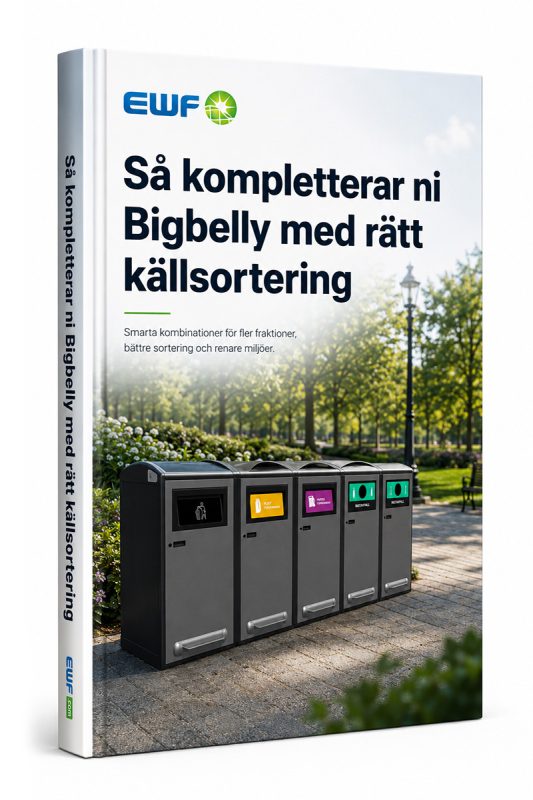
Combine smart trash cans, sensors, and waste sorting
Different locations require different solutions. In some parks, sensors on existing bins are sufficient. In other settings, smart trash cans with compaction can be more effective, especially where usage is high and the need for emptying varies significantly.
In places where many people eat, have coffee, or spend a lot of time, waste sorting can be an important part of the solution.
A vibrant park environment may therefore need to combine:
- Smart heavy-duty trash cans
- sensors for improved drainage control
- Waste sorting solutions in the right locations
- clear signage
- good location
- ongoing monitoring
The key is that the solution is based on how people actually use the space.
What is smart waste management in parks?
Smart waste management in parks involves using trash cans, sensors, and data to better monitor fill levels, emptying needs, and operations. This makes it possible to empty bins based on actual usage rather than strictly on fixed schedules.
How can smart waste management reduce littering?
When trash cans are emptied before they become overflowing, the risk of waste ending up next to the bins is reduced. Smart solutions can send alerts when bins need to be emptied, making it easier to take action in a timely manner.
Do all trash cans in a park need to be smart?
No. It is often most effective to start with the areas where foot traffic is heaviest or most unpredictable. These might include entrances, picnic areas, swimming areas, walkways, or event spaces.
Are smart trash cans suitable for green spaces?
Yes, smart trash cans can be a great fit for green spaces where the need for emptying varies over time. They are particularly useful in areas with high visitor traffic, long distances, or recurring issues with overflowing bins.
Can smart waste management reduce operating costs?
Yes, in many cases, better control of fill levels can lead to fewer unnecessary collections, more efficient routes, and better use of staff time. The impact depends on the environment, the number of bins, collection procedures, and workload.
Does smart waste management work at events?
Yes, data and supplementary information can be particularly valuable during events or periods of high demand. This makes it easier to reinforce the right locations and avoid overflowing containers.
Can this solution be combined with waste sorting?
Yes. Smart waste management can be combined with source separation in public spaces. For maximum effectiveness, clear signage, proper placement, and monitoring of how the solution is used are necessary.
Tell us a little about your environment, your needs, and what you’d like to improve. We’ll help you find a solution that works for the location, the users, and your operations—without making things more complicated than they need to be.