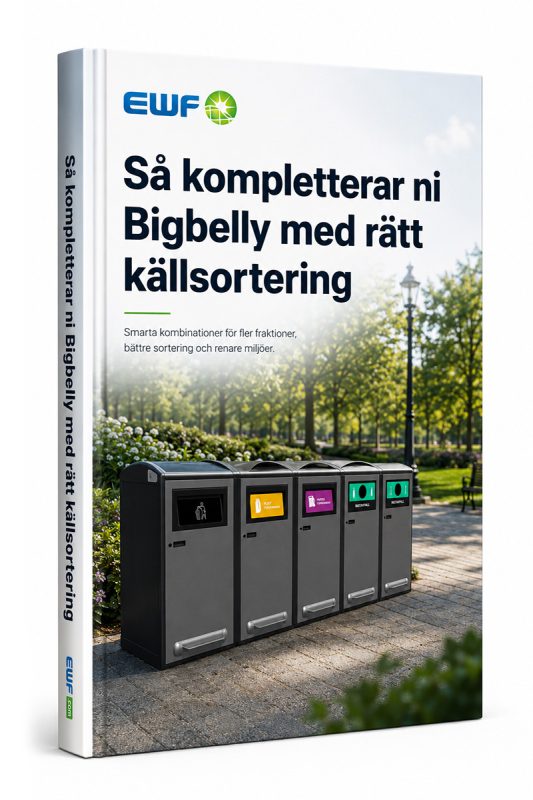
In public transportation settings, litter is quickly noticed
An overflowing trash can at an entrance, platform, or bus stop doesn’t just affect cleanliness—it affects the entire experience of the place.
At the same time, traffic patterns are difficult to predict. Rush hour traffic, weekends, events, weather, and traffic disruptions can quickly change the volume of traffic. That is why waste management needs to be more flexible, data-driven, and easy to monitor.
Smart waste management makes it possible to collect waste based on actual needs rather than simply following fixed schedules.
Common challenges at transit hubs and in public transportation
Waste management in public transportation settings is often more complex than in many other public spaces. Large numbers of people pass through in a short period of time, while operations and waste collection must proceed without disrupting passengers, traffic flow, or safety.
Common challenges include:
- trash cans that quickly fill up during rush hour
- litter around entrances, bus stops, platforms, and walkways
- uneven demand due to time, weather, season, and events
- fixed collection schedules that do not match actual needs
- difficulty knowing which bins need to be emptied first
- limited space for operating personnel and service vehicles
- high standards for cleanliness, safety, and accessibility
- risk that litter will affect the first impression of the place
When waste management isn’t up to par, the environment quickly comes across as sloppy, messy, or unsafe. It may sound harsh, but at a travel center, the details matter a great deal. Travelers may only be there for a few minutes—which makes the visual impression all the more important.
That is why smart waste management is well-suited to public transportation settings
Travel centers and public transportation hubs often experience distinct peak periods. Some bins fill up quickly several times a day, while others remain nearly empty. Without data, it is difficult to know what is actually happening.
Smart waste management provides a better overview.
This may help you:
- View fill levels in real time
- prioritize the right trash cans at the right time
- reduce the number of unnecessary trips
- avoid overflowing bins in critical locations
- improve traffic management during rush hour and events
- improve cleanliness in high-traffic areas
- reduce manual inspection rounds
- make better decisions regarding placement, number, and capacity
In short: you’ll have a better handle on things before the problem becomes apparent to the traveler.
How the solution works

Smart waste management can be tailored to the specific needs of a location, traffic flow, and operational structure. In some settings, smart compacting trash cans are the most appropriate solution. In others, fill sensors on selected bins may provide sufficient control.
A solution could consist of:
- smart, high-capacity trash cans
- level sensors
- digital overview of containers and emptying needs
- notifications when bins need to be emptied
- data on traffic volume at different times and locations
- solutions for waste sorting in public spaces
- a review that identifies where capacity needs to be adjusted
The goal is to make operations more precise: the right collection, in the right place, at the right time.
Learn more about smart trash cans
Keep it clean where the flow is heaviest
At transit hubs, there are often areas where foot traffic is significantly higher than in other areas. These may include entrances, bus terminals, areas near platforms, waiting areas, ticket halls, bicycle parking areas, or walkways connecting different modes of transportation.
If the vessels there become full, it will quickly affect many people.
Smart waste management helps you identify and prioritize these issues. You can see which bins frequently reach capacity, which ones need a larger capacity, and which ones may be in the wrong location.
This makes it easier to create a cleaner, more welcoming, and more resilient traffic environment.
Reduce unnecessary emptying and manual inspection rounds
In settings with many waste bins, regular inspection rounds can be time-consuming. Staff often have to check waste bins that don’t need to be emptied, while other bins may become overfilled between rounds.
With fill data, the work can be managed more efficiently.
This can help:
- fewer unnecessary empties
- less time spent on manual checks
- better prioritization throughout the day
- fewer emergency responses
- smarter resource planning
- lower operating load
- more efficient use of staff time
This is particularly valuable in public transportation settings, where service often needs to be provided quickly, safely, and without disrupting the flow of traffic.
A better experience for travelers and visitors
Cleanliness is an important part of the experience in public transportation settings. When a space is clean, uncluttered, and well-maintained, it is often perceived as safer and more professional.
Smart waste management can help:
- less visible litter
- fewer overflowing trash cans
- better first impression
- clearer and more organized environments
- better conditions for recycling
- greater comfort for passengers, staff, and visitors
It's not just about trash. It's about the overall atmosphere of the place.
Data to support operations, site selection, and investments
A major advantage of smart waste management is that it provides you with data to inform your decisions over time. Instead of relying solely on personal impressions, complaints, or old routines, you can see how the bins are actually being used.
Data can help you understand:
- which locations have the highest traffic volume
- at what times of day waste increases
- how rush-hour traffic affects fill levels
- how events and disruptions affect demand
- which containers should be moved
- which containers should have a larger capacity
- where waste sorting works best
- whether the collection routes should be adjusted
This makes it easier to make decisions regarding both operations and investments.
Designed for various types of traffic environments
Smart waste management can be used in many types of public transportation settings.
Examples of places where this solution might be suitable:
- travel center
- train stations
- bus terminals
- major bus stops
- tram stops
- areas near the subway
- platforms and waiting areas
- ticket halls
- walkway between modes of transportation
- bike parking at stations
- commuter parking lots
- mobility hubs
- high-traffic entrances and exits
Every location has its own unique conditions. Therefore, the solution should be tailored to passenger flow, space, access, operations, security, and how passengers actually move through the environment.
Waste sorting at the travel center and in public transportation areas
Waste sorting in public transportation settings can be very beneficial, but it needs to be easy to understand. Passengers are often in a hurry and make decisions quickly.
For waste sorting to work effectively, the solution must be:
- clearly marked
- easy to use
- located where the waste is actually generated
- designed for common types of waste
- easy to empty and maintain
- consistent throughout the entire environment
Common waste categories may include, for example, general waste, recyclables, paper, plastic, or food waste, depending on the facility’s offerings and intended use.
Smart waste management can be combined with source separation to both improve the purity of the waste and provide better tracking of how the solution is being used.
Internal link:
Learn more about waste sorting in public spaces
When is smart waste management appropriate at a travel center?
This solution is particularly well-suited if any of the following sound familiar to you:
- you have many travelers or visitors for short periods of time
- Some trash cans are overflowing, while others are almost empty
- You have a hard time scheduling pickups based on actual needs
- Operations staff need to spend a lot of time on inspection rounds
- You receive recurring complaints about litter or overflowing bins
- The workload varies significantly between weekdays, weekends, and special events
- you want to improve cleanliness without increasing manual labor
- you want to use data to develop the site over time
It may be wise to start with the most critical areas. These often include entrances, waiting areas, walkways, bus stops, or areas near service facilities, kiosks, and food outlets.
What is smart waste management for a travel center?
Smart waste management for travel centers involves using trash cans, sensors, and data to better monitor fill levels and emptying needs. This makes it possible to empty bins based on actual usage rather than strictly following fixed schedules.
How can smart waste management reduce littering at stations?
By monitoring fill levels, bins can be emptied before they become overfilled. This reduces the risk of litter ending up next to the trash cans and helps keep entrances, waiting areas, and walkways cleaner.
Is this solution suitable for bus stops and smaller transit hubs?
Yes. At smaller traffic intersections, sensors or selected smart bins can provide effective management without requiring a complete overhaul of the area. The most important thing is to start where the traffic volume or littering is heaviest.
Do all the trash cans need to be replaced?
No. It’s often possible to start with selected locations. Some bins can be replaced with smart trash cans, while others can be equipped with sensors or kept as they are.
Can this solution help reduce disposal costs?
Yes, better information about fill levels can help reduce unnecessary collections and improve planning efficiency. The impact depends on the number of containers, collection procedures, volume, and how operations are organized.
Does smart waste management work during rush hour?
Yes. Smart waste management is particularly relevant in environments with fluctuating demand, such as during rush hour, events, or traffic disruptions. This makes it easier to prioritize the right containers at the right time.
Can waste sorting work in public transportation settings?
Yes, but it has to be very clear and simple. Travelers are often in a hurry, so signage, placement, and route selection need to be tailored to their actual behavior.