Smart solutions for the cities of the future
Contact us

+46104952495

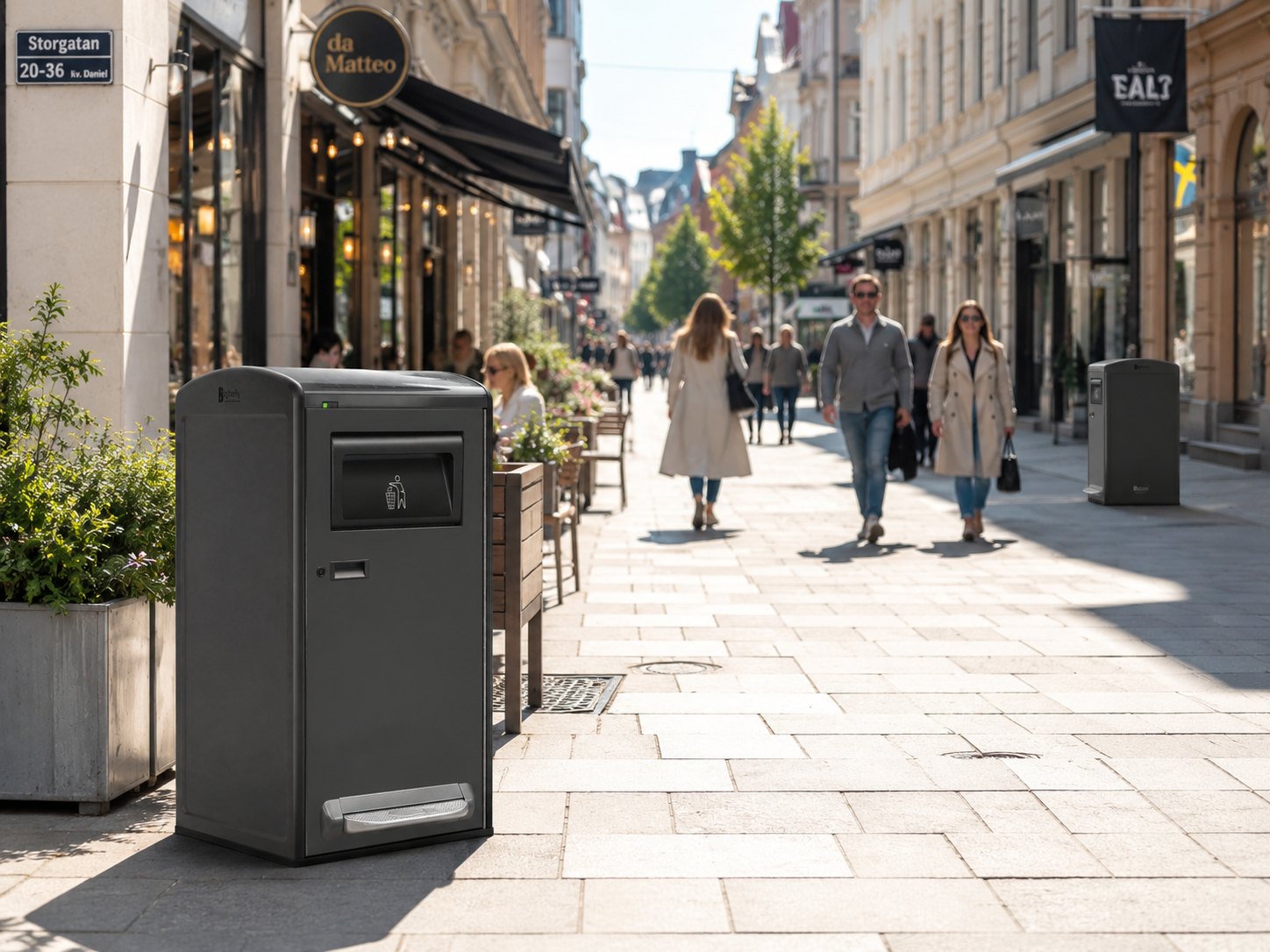
Smart waste management for town squares and city centers

Squares, pedestrian streets, and city centers are places where many people walk, stop, shop, eat, and meet. When waste management isn’t working, it’s immediately noticeable—in the form of overflowing trash cans, litter around the bins, and a less favorable impression of the entire area.

In city centers, waste streams vary greatly

On a typical weekday, the volume of waste may be low in certain areas, while the lunch rush, market days, events, weekends, and seasonal peaks can quickly fill the bins.

Traditional collection schedules often fall short. Some trash cans are emptied even though they’re barely used, while others fill up before the next collection. This creates unnecessary work, increased costs, and an urban environment that can quickly feel cluttered.

Smart waste management makes it possible to schedule collections based on actual usage—not just on a routine basis.

Common challenges related to waste in public squares and city centers

Central public spaces often have high standards for cleanliness, accessibility, and user experience. At the same time, they are difficult to plan for because their use is constantly changing.

Common challenges include:

  • trash cans that get overflowing at lunchtime, on weekends, and during events
  • litter around trash cans in town squares, pedestrian streets, and entrance areas
  • fixed collection schedules that do not match actual needs
  • significant differences in load between different locations
  • a lot of single-use packaging, takeout waste, and deposit bottles
  • market stalls and seasonal activities that increase the amount of waste
  • difficulty in determining which vessels should be prioritized first
  • a negative impact on visitors' experience of the city center

When central areas become littered, it’s not just sanitation that suffers. It also affects safety, quality of life, business, and the municipality’s image. It’s pretty stark: a littered city center can make an otherwise nice place feel neglected.

That is why smart waste management is ideal for city centers

Public squares and central thoroughfares often experience a waste flow that is both heavy and irregular. This makes it difficult to determine the appropriate frequency using traditional procedures.

With smart waste management, you gain better control over what’s actually happening on-site.

This may help you:

  • View fill levels in real time
  • prioritize the right trash cans at the right time
  • reduce unnecessary trips to the trash
  • avoid placing overflowing bins in visible areas
  • plan better for events and weekends
  • identify locations with recurring high traffic
  • improve cleanliness in the city center
  • monitor the impact of new bins, new locations, or source separation

The result is more efficient operations and an urban environment that feels better maintained.

How the solution works

Smart trash cans in public squares

Smart waste management can be tailored to the needs, waste streams, and existing operational structure of the city center.

For example, a solution could consist of:

  • smart, high-capacity trash cans
  • level sensors that measure waste levels
  • digital overview of containers and emptying needs
  • notifications when bins are getting full
  • data showing load over time
  • solutions for waste sorting in public spaces
  • basis for smarter placement and sizing

The goal is simple: proper disposal, in the right place, at the right time.

In a town square or city center, this might mean that particularly full bins are emptied before they become overflowing, while other bins are left until they actually need to be emptied. This saves time and reduces the risk of visible litter.

Learn more about smart trash cans

Keep the city center clean even when traffic volume fluctuates

In urban areas, waste volumes can change rapidly. A sunny Saturday, a market square, a major event, or a period with many outdoor dining establishments can cause waste volumes to increase sharply in a short period of time.

Smart waste management makes it easier to handle these variations.

For example, you can gain better control over:

  • lunch area with a lot of takeout waste
  • marketplace with market stalls or food vendors
  • central seating areas and meeting spots
  • walkway connecting retail, parking, and public transportation
  • areas with outdoor dining
  • places where a lot of returnable bottles or packaging are thrown away
  • event spaces and temporary spikes in visitor numbers

Once you know where and when the pressure is highest, you can plan more effectively and take action before the problem becomes apparent.

Reduce overflowing trash cans and littering

Overflowing trash cans are a common cause of litter on the ground. When a trash can is full, waste often ends up spilling out—and from there, it quickly spreads further due to the wind, birds, or passersby.

This is particularly noticeable in town squares and city centers, since many people pass through the same area.

With smart waste management, you can:

  • receive alerts before containers become overfilled
  • prioritize emptying visible and critical locations
  • reduce litter around trash cans
  • reduce the need for emergency cleaning
  • improve the first impression of the city center
  • create a cleaner and more welcoming public environment

A clean urban environment isn’t just about maintenance. It’s also about trust. When a place feels well-maintained, it fosters a sense of order, safety, and care.

Optimize waste disposal and make better use of resources

In many city centers, waste collection follows fixed routes. This is easy to plan, but not always efficient. Some bins are emptied unnecessarily, while others become overfilled between collections.

With occupancy data, operations can be better tailored to demand.

This can help:

  • fewer unnecessary collection rounds
  • less time spent on manual checks
  • better prioritization of vessels with high blood flow
  • lower operating load
  • reduced traffic in the city center
  • better planning for weekends and events
  • more effective monitoring of initiatives

For municipalities and service providers, this can lead to better control without necessarily increasing the workload. Often, it is more a matter of doing the right things in the right order.

A better basis for planning, capacity, and investments

A common problem in public spaces is that decisions regarding the placement and number of trash cans are based on habit, complaints, or gut feeling. This may work sometimes, but it is rarely the best solution.

With data from smart waste management, you can see how the site is actually being used.

You can get answers to questions such as:

  • Which containers fill up the fastest?
  • Which locations have recurring problems?
  • Are there any containers that aren't being used enough?
  • Do some containers need a larger capacity?
  • Should any containers be moved?
  • Where would waste sorting have the greatest impact?
  • How do events and the season affect the workload?
  • How does the amount of waste change over time?

This provides a stronger basis for decision-making when you want to develop the city center, reduce littering, or improve sanitation.

Smart waste sorting in city centers

Many city centers have good opportunities to improve waste sorting, especially in places where large amounts of packaging, returnable containers, and food-related waste are generated.

But in public spaces, recycling must be simple. Visitors should understand immediately—even when they’re in a hurry or just passing by.

To be effective, waste sorting in city centers needs to be:

  • clearly marked
  • located where the waste is actually generated
  • consistently designed across multiple locations
  • easy to use even at high flow rates
  • designed for common types of waste
  • easy for maintenance staff to empty and maintain

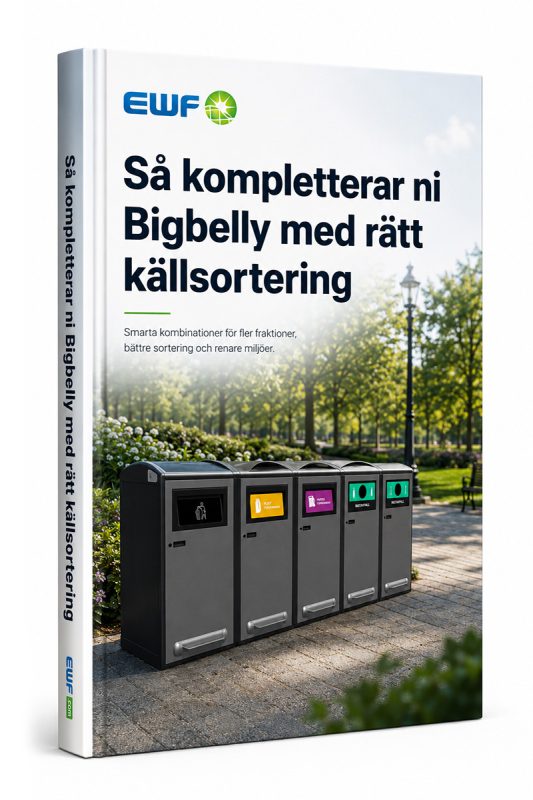
Smart waste management can be combined with source separation to both improve sorting and provide better tracking of which locations are used most frequently.

Learn more about waste sorting in public spaces

Suitable for a variety of central locations

Smart waste management can be implemented in many locations in and around the city center.

Examples of environments where this solution might be suitable:

  • square
  • pedestrian streets
  • shopping district
  • entrance area
  • central parks
  • outdoor dining areas
  • marketplaces
  • event spaces
  • locations near public transportation
  • bike racks
  • beach walks in the city center
  • public seating areas
  • tourist hotspots
  • walkway near the parking lot

Needs vary depending on the type of space. A square with a market may require high capacity at certain times, while a pedestrian walkway may need more strategically placed bins that are emptied more frequently. Therefore, the solution should be based on the actual use of the space.

When is smart waste management suitable for town squares and city centers?

This solution is particularly well-suited if any of the following sound familiar to you:

  • You have recurring problems with overflowing trash cans
  • Trash accumulates around trash cans in visible areas
  • Emptying is carried out according to fixed schedules without taking actual demand into account
  • The workload varies significantly between weekdays, weekends, and special events
  • You want to improve the downtown experience
  • you want to reduce manual inspection rounds
  • You are responsible for many containers at several central locations
  • you want to have a better basis for making decisions regarding placement, capacity, and investments
  • You want to test smart waste management in a specific area of the city center

It may be wise to start where the problems are most evident. For example, in town squares, pedestrian walkways, lunch areas, locations near public transportation, or areas with a lot of events and retail activity.

Benefits for municipalities, downtown developers, and site managers

Smart waste management creates value for various stakeholders responsible for key public spaces.

For municipalities

Cleaner town squares and city centers enhance the municipality’s image and can help create more attractive public spaces.

For the operations organization

Staff will have clearer priorities and can spend less time on unnecessary checks.

For urban developers

A clean and well-maintained downtown area enhances the experience for visitors, retailers, and businesses.

For residents and visitors

Less litter and better organization make public spaces more pleasant, accessible, and welcoming.

For decision-makers

Data makes it easier to track results, plan investments, and prioritize the right initiatives.

What is smart waste management for public squares and city centers?

Smart waste management for public squares and city centers involves using trash cans, sensors, and data to better monitor fill levels, emptying needs, and operations. This makes it possible to empty bins based on actual usage rather than strictly on fixed schedules.

How can smart waste management reduce littering in the city center?

By monitoring fill levels, bins can be emptied before they become overfilled. This reduces the risk of litter ending up next to the trash cans and helps keep squares, pedestrian streets, and central thoroughfares cleaner.

Do all trash cans in the city center need to be smart?

No. It’s often best to start with the busiest or most visible areas. These might include public squares, lunch areas, locations near public transportation, entrances, or areas where events are frequently held.

Are smart trash cans suitable for public squares?

Yes, smart trash cans can be a great fit for public squares where usage varies throughout the day, week, and season. They are particularly useful in places where bins often become overfilled or where emptying needs to be scheduled more accurately.

Can this solution reduce disposal costs?

Yes, better information about fill levels can help reduce unnecessary emptying and enable smarter planning. The impact depends on the number of containers, emptying procedures, load, and how operations are organized.

Does smart waste management work at events?

Yes. Smart waste management is particularly useful at events, markets, and during peak seasons because the volume of waste can change rapidly. Data makes it easier to prioritize the right locations.

Can smart waste management be combined with source separation?

Yes. Smart waste management can be combined with source separation in public spaces. For maximum effectiveness, clear signage, proper placement, and monitoring of how the solution is used are necessary.

Gain better control with a solution tailored to your environment

Tell us a little about your environment, your needs, and what you’d like to improve. We’ll help you find a solution that works for the location, the users, and your operations—without making things more complicated than they need to be.

Download the guide to smart waste sorting

Download the ACE product sheet

Enter your details to download product sheets. The product sheet will in turn be sent to your e-mail address.
Log in

Let's work together!

Customer service: +46 (0)10-495 24 95
Head office: Vallbyvägen 22, 76251 Rimbo, Sweden
Mon-Fri: 07:30-16:30